Understanding Gastric Ulcers in Horses: Who's Most at Risk and How to Help

Gastric ulcers are one of the most common — and most overlooked — health issues in horses. Studies suggest the majority of racehorses and a large share of competition and leisure horses are affected at some point. The tricky part is that signs can be subtle, so many horses live with discomfort before anyone notices.
What are gastric ulcers?
A horse's stomach produces acid continuously, because in nature it grazes almost all day and a steady trickle of forage buffers that acid. Problems start when the stomach is empty for long stretches: acid splashes against the unprotected upper part of the stomach lining and causes painful ulcers. This is why how and when we feed matters as much as what we feed.
Which horses are most at risk?
- Horses in hard training or competition, especially racehorses.
- Horses stabled for long periods with limited forage.
- Horses fed large grain meals and little forage.
- Horses under stress — travelling, competing, or a change of routine.
- Horses with long gaps between feeds.
Signs to watch for
- Picky appetite or leaving feed.
- Dropping weight or poor condition despite good feeding.
- Dull coat and low energy.
- Girthiness, or resistance under saddle.
- Changes in temperament or behaviour.
These signs can point to other problems too, so if you suspect ulcers, your vet can confirm with a gastroscope — the only way to be sure.
How to help through management
Most ulcer prevention comes down to mimicking natural grazing: provide forage little and often so the stomach is rarely empty, maximise turnout, reduce large grain meals, and keep stress and routine changes to a minimum. Always offer a forage feed before work rather than exercising on an empty stomach.
Gut support supplements
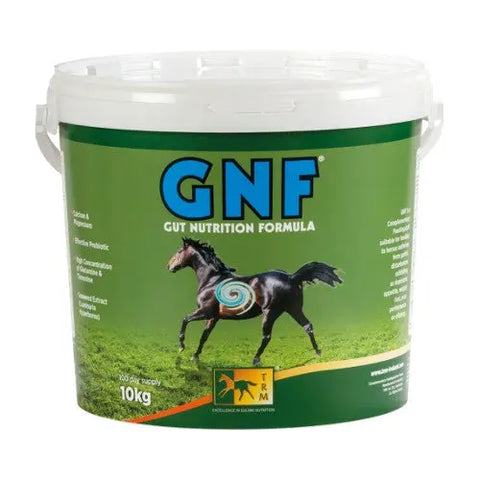
Alongside good management, targeted gut support helps. TRM GNF combines alkaline minerals, glutamine and a prebiotic to support a healthy stomach and is popular for horses prone to ulcers or showing stable vices. For the hindgut, TRM Synbiovit supports a healthy microbial balance, and NeutrAcid helps buffer acid in hard-working horses. Explore the full gut health range to match your horse's situation.
Ulcers are manageable — and often preventable — with the right feeding routine and support. If your horse is showing signs, speak to your vet before starting any treatment.
Share
Featured product