How to Put Weight on a Thin Horse Safely

1. Find Out Why Your Horse Is Underweight
Weight loss is a symptom, not a diagnosis. Before increasing feed or adding supplements, investigate why your horse is losing weight or failing to maintain condition.
Common causes include:
-
Dental problems that make chewing difficult.
-
An inadequate diet or poor-quality forage.
-
Parasites or gastrointestinal problems.
-
Gastric ulcers, chronic pain or other underlying illness.
-
Increased energy requirements during training, competition or recovery.
Arrange a veterinary examination if weight loss is unexplained, persistent or accompanied by changes in appetite, behaviour or droppings. Dental assessment and a parasite-control plan should be based on the horse's individual needs.
Correcting the underlying problem is often more important than simply increasing the amount of feed.
2. Start With Good-Quality Forage
Forage should form the foundation of most horses' diets. Suitable hay, grass or other appropriate forage provides fibre and supports normal digestive function.
Review the quality and quantity of forage your horse is actually consuming. A horse may have access to hay but still struggle to maintain weight if the forage is poor quality, difficult to chew or insufficient for its needs.
Where appropriate, improve forage quality or availability before relying on large amounts of concentrate feed. The type and quantity of forage should be adjusted to the horse's condition, workload and any dietary restrictions recommended by your veterinarian.
Horses with certain metabolic conditions may need carefully selected forage rather than unrestricted access to rich pasture.
3. Add Calories Gradually
If the horse is healthy but isn't getting enough energy from its current ration, additional calories may be necessary.
Depending on the existing diet and the horse's needs, options may include a suitable conditioning feed, higher-energy forage or a carefully measured fat source.
Oil can be a useful way to increase dietary energy because fat provides concentrated calories. However, it should be introduced gradually, with the quantity determined by the overall ration and the horse's tolerance.
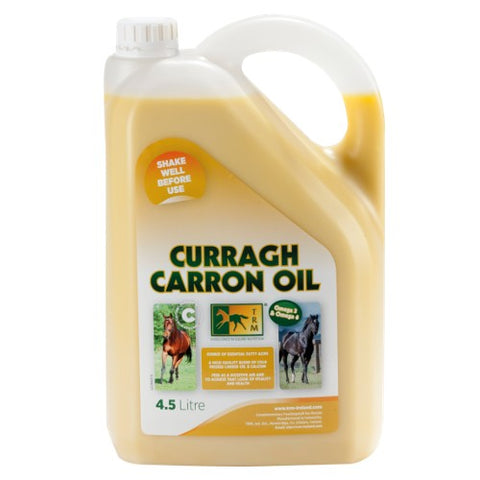
Curragh Carron Oil is one option to consider when evaluating fat sources for an equine feeding programme. Review its current product specifications and feeding instructions before deciding whether it suits your horse.
Avoid making several major dietary changes at once. Gradual adjustments make it easier to monitor tolerance and identify what is actually helping.
4. Build Muscle and Improve Topline
Weight gain and muscle development are related, but they are not the same thing. A horse can gain fat without developing the muscle and topline desired for its workload.
Adequate energy, good-quality protein and essential amino acids are important for maintaining and developing muscle. Appropriate exercise, recovery and an overall balanced ration also matter.
Two products worth considering for their specific nutritional roles are:
TRM Maxi-Top Equine: Provides amino acids, including branched-chain amino acids, to support muscle mass in horses in training, growing horses and horses undergoing rehabilitation. It is a nutritional supplement, not a substitute for adequate protein and energy in the overall diet.
TRM Muscle-Up: Made from concentrated rice bran oil, it provides dietary fat and energy. It may be relevant when additional calories are needed to support body condition, depending on the horse's existing ration.
Choose between these products based on the horse's actual nutritional requirements. They serve different purposes and should not automatically be used together.
5. Consider Digestive Health
Increasing the amount of feed will not solve every weight problem. Dental difficulties, gastrointestinal disease, poor feed quality and an unbalanced ration can all affect how successfully a horse maintains condition.
Start by checking that the horse is eating enough, chewing comfortably and receiving a balanced diet.
TRM Synbiovit contains live yeast, prebiotics and B vitamins. It is intended to support hindgut function and fibre digestion as part of an appropriate feeding programme.
TRM GNF is a gut nutrition formula containing minerals, amino acids and a prebiotic. It is intended to support digestive function.
These products have specific nutritional roles; neither should be presented as a treatment for an undiagnosed cause of weight loss. If gastric ulcers are suspected, consult your veterinarian about diagnosis and appropriate management.
6. Monitor Progress and Adjust the Diet
Healthy weight gain takes time. Rather than increasing feed aggressively, make measured changes and assess the horse's response.
Use a weigh tape consistently, record body weight where a suitable scale is available, and assess body condition and topline regularly. Photographs taken from the same angles can also help you compare changes over time.
Keep a record of:
-
Daily forage and concentrate intake.
-
Supplements and quantities fed.
-
Appetite, droppings and general behaviour.
-
Body weight or weigh-tape measurements.
-
Body condition and muscle development.
-
Workload and recovery.
Make dietary changes gradually, commonly over one to two weeks, while following the instructions for each feed. A veterinarian or qualified equine nutritionist can help determine suitable calorie increases and a realistic target for weight gain.
Severely underweight horses need particular care. Rapidly increasing feed after prolonged undernutrition can cause dangerous refeeding complications, so these horses should be managed under veterinary supervision.
Frequently Asked Questions
What is the best way to help a horse gain weight?
First identify the cause of the low body condition. For a healthy horse that needs additional calories, improve the quality and quantity of suitable forage, assess the balance of the existing ration and add appropriate energy sources gradually. Veterinary assessment is important when the cause is unclear.
Can oil help a horse gain weight?
Oil is a concentrated source of dietary energy and may help horses gain weight when the existing ration does not provide enough calories. Introduce it gradually and account for the entire diet rather than adding it without adjusting other feed.
Which supplements help horses develop muscle?
Muscle development depends on adequate energy, good-quality protein, essential amino acids, suitable exercise and recovery. A product such as TRM Maxi-Top Equine can provide additional amino acids where they are appropriate for the horse's needs.
Can digestive supplements help an underweight horse?
Digestive supplements may have a role in supporting normal digestive function, depending on their ingredients and intended use. They do not replace investigation of dental problems, inadequate feeding or gastrointestinal disease.
How quickly should a horse gain weight?
There is no single appropriate rate for every horse. Progress depends on the starting body condition, health, age, workload and diet. Monitor changes regularly and adjust the feeding programme with veterinary or nutritional guidance.
Final Thoughts
Helping an underweight horse regain condition requires a plan, not simply a bigger feed bucket. Identify the cause, provide appropriate forage, balance the ration and increase calories gradually. Use supplements to address specific nutritional needs rather than as a substitute for a sound feeding programme.
Rising Equine supplies equestrian nutrition products in India, including selected TRM supplements. Explore the relevant product information to compare ingredients, intended uses and feeding instructions, and consult your veterinarian or equine nutritionist when deciding what is appropriate for your horse.
Share
Featured product