Feeding Horses on a Budget: Smart Nutrition Without Compromise

Keeping a horse well-fed can feel expensive, but good nutrition isn't about spending the most — it's about spending wisely. With a few smart choices you can feed a healthy, well-conditioned horse without wasting money on things it doesn't need.
Forage first — your cheapest and most important feed
Forage (grass, hay) should make up the bulk of every horse's diet. It's not only the most natural feed, it's usually the most cost-effective way to keep a horse healthy. Good-quality forage, fed in plenty, reduces how much hard feed you need and keeps the digestive system working as nature intended. Spending a little more on clean, quality hay often saves money elsewhere.
Don't overfeed concentrates
Grain and concentrates are often fed out of habit, in bigger amounts than the horse actually needs. For many leisure and light-work horses, good forage plus a balanced top-up is enough. Overfeeding grain wastes money and can cause problems like excitability, weight gain and digestive upset. Feed concentrates to the work your horse is actually doing.
Buy smart
Buy in sensible bulk where you have dry, pest-free storage, and store feed properly so none is spoiled or wasted. Compare cost per feed, not just the price on the bag — a concentrated product fed in small amounts can work out cheaper than a cheap product you have to feed by the scoop.
Supplement only what's needed
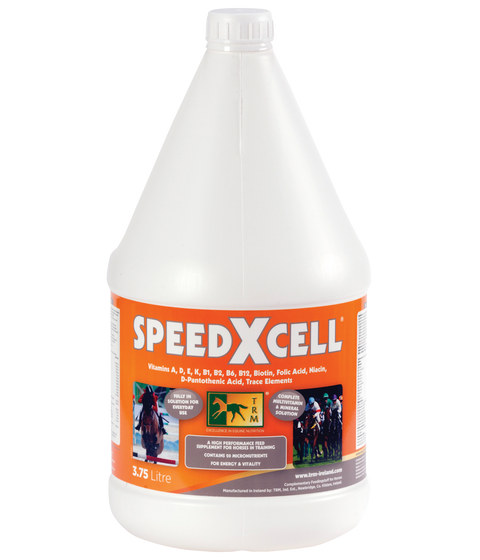
Rather than buying lots of single supplements, a good-value all-rounder often covers the gaps. TRM SpeedXcell is a complete vitamin and mineral supplement that fills the nutritional holes a forage-and-grain diet leaves, in one daily product. In hot weather, a straightforward daily electrolyte like TRM Isopro covers hydration cost-effectively. Add targeted supplements only for a real, specific need.
Where not to cut corners
- Clean, fresh water — always available, no exceptions.
- Salt — cheap and essential; a plain salt lick or added salt costs little.
- Forage quality — mouldy or dusty hay is a false economy.
- Routine care — teeth, feet and worming keep bigger bills away.
Feed to the individual horse and the work it does, put your money into forage and the basics, and supplement with intent. That's how you feed well without overspending.
Share
Featured product